







The number of minors using drugs is on the rise in Lithuania. In 2021, there were 74 cases of teenagers poisoned by drugs, and 115 last year. But politicians are divided on what to do, with some saying that education is enough and others advocating for stricter measures.
Extracurricular activities are one way to ensure that children feel safe and stay away from drugs, says Andrius Čerškus, founder of the Basketball School in Vilnius.
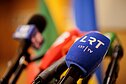
“As such, children’s free time revolves around the community [...]. It’s a safe environment for them,” he tells LRT TV.
In most municipalities, however, the basket for children’s extracurricular activities is 15 euros per month, which is too little.
“Football training costs 80 or 100 euros, hockey 150 euros, basketball 60 euros,” Čerškus says.
Lithuanian politicians also agree that non-formal education can act as a drug use prevention tool and that more money should be spent on encouraging children to participate in it.

“I am surprised at this government which only talks about increasing the non-formal education basket but does nothing about it,” says Tomas Tomilinas, vice-chair of the parliament’s Commission for the Prevention of Addictions.
“Money is needed and will be needed, so it is important not to spend it on measures that are scientifically proven to be ineffective,” adds Morgan Danielė, the commission’s chair.
But politicians disagree on which measures are effective.
One of the so-called “hard measures” that the parliament is inclined to support is to allow both school staff and police officers to check students’ belongings.
“I’m concerned about the talk that we will fight by sending the police to rummage through children’s backpacks. We shouldn’t do this,” Danielė says.
Further reading
School heads also say they prefer “soft” measures. The Association of School Heads is considering allowing children to stay in schools longer after classes.
“Maybe we should think about measures to go beyond non-formal education and combine it with family activities to keep children occupied until late in the evening,” says Dainius Žvirdauskas, head of the association.

The Ministry of Education, Science and Sport points out that children are also taught about the dangers of drugs in the life skills programme which was launched in Lithuanian schools this year.
“From the first grade onwards, they will be taught about unsafe substances, and in older grades, they will move on to addictions, how addictions are formed, and what harm they cause,” stresses Ignas Gaižiūnas, adviser to the education minister.
According to police data, 150 cases of minors committing criminal offences related to the disposal and smuggling of narcotic drugs and psychotropic substances were registered in Lithuania last year. In the first eight months of this year, 75 such cases were registered.
Recently, a 17-year-old died in Lithuania’s southern city of Marijampolė after a suspected overdose, while several other minors needed medical treatment for drug poisoning.
Further reading

Newsletter
Every Friday morning.